
The Site That Prequalifies C&S
Before the Builder Calls
Steel fixing and reinforcement, commercial and residential construction
Builders, contractors, developers, and project-decision makers
Gympie, the Sunshine Coast, and Northern Brisbane
Logo, brand identity, website design and development
The
Situation
C&S has a decade of steel fixing behind it and Shane Aisbett has more than 26 years in the industry. The company has delivered reinforcement for Habitat Development Group, Tomkins, Mosaic Property Group, Cube, Sunstruct and McNab, on multi-storey residential, aged care and commercial builds across South East Queensland.
All of that lived in Shane’s head and in the memories of the site managers he had worked with.
Steel fixing is won on referral. That works until the person who knows you moves to another builder, or a contracts administrator you have never met is asked to check you out before your quote goes to the board.
At that point your reputation has to exist somewhere outside the relationship, and for C&S it did not.
The Prequal
Pack
Seven elements, each answering a question the builder was going to ask anyway.
Named builders,
not adjective
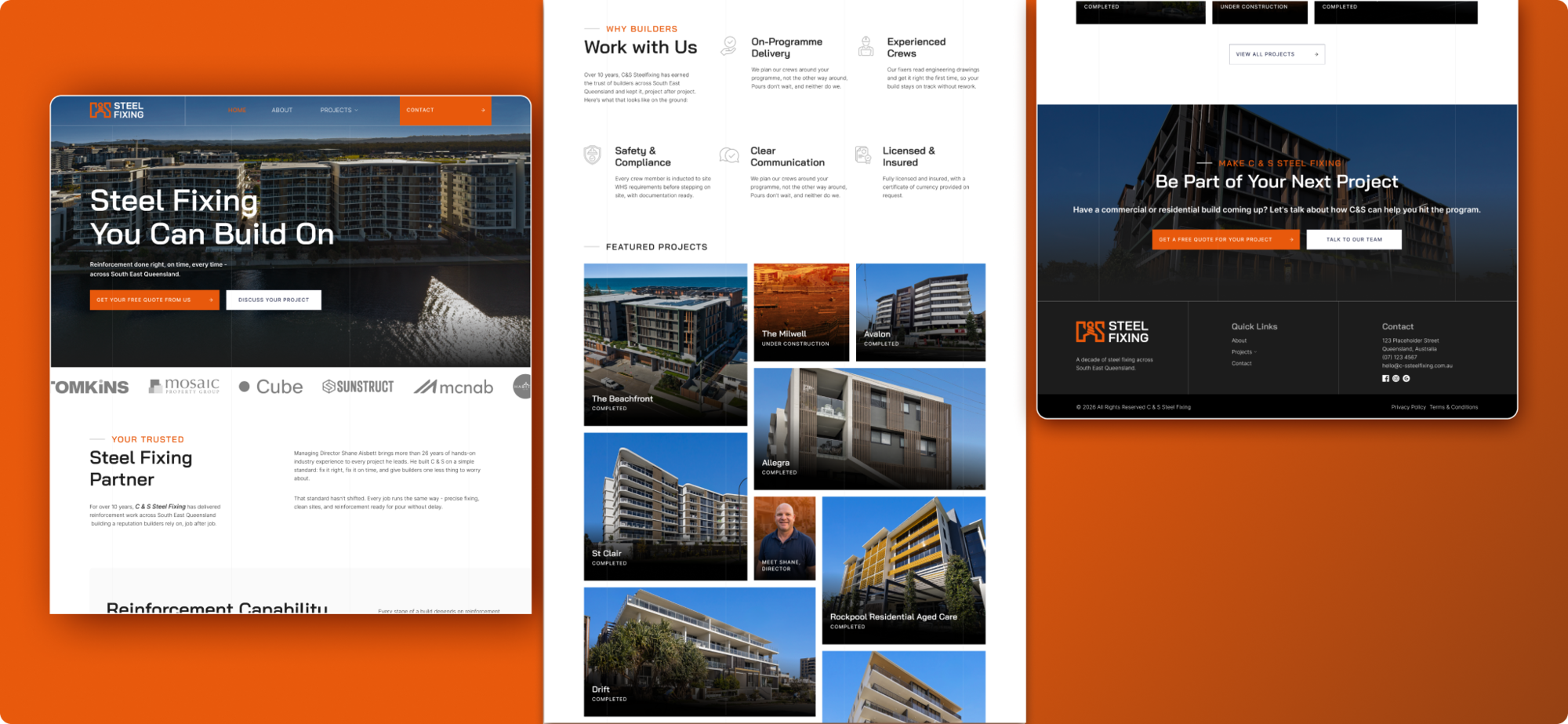
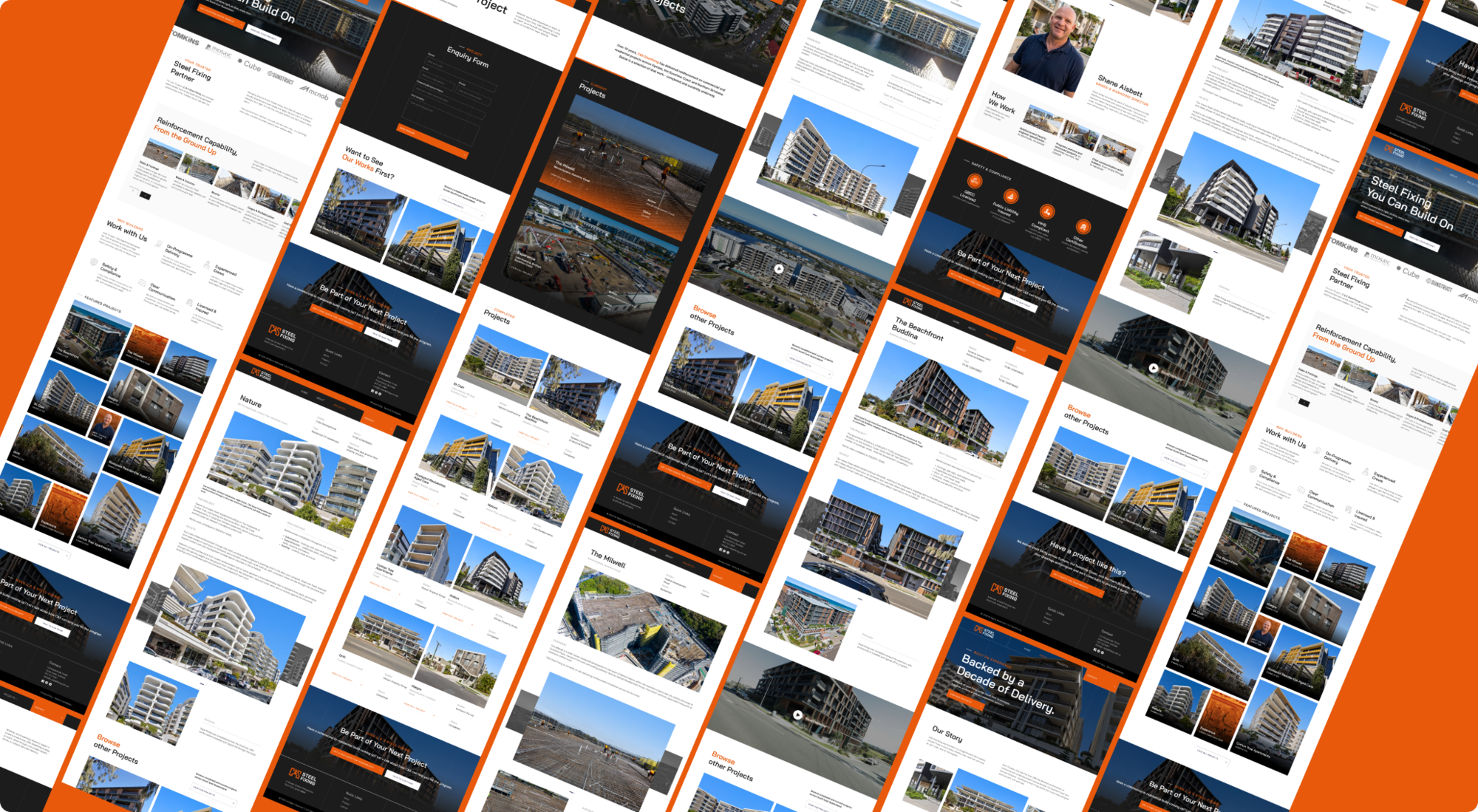
Six builder logos sit directly beneath the hero: Habitat, Tomkins, Mosaic Property Group, Cube, Sunstruct and McNab. For this audience that row is the single most persuasive thing on the site, because these are not testimonials anyone can write. They are names the visitor either recognises or can ring.
The builder credited
on every project
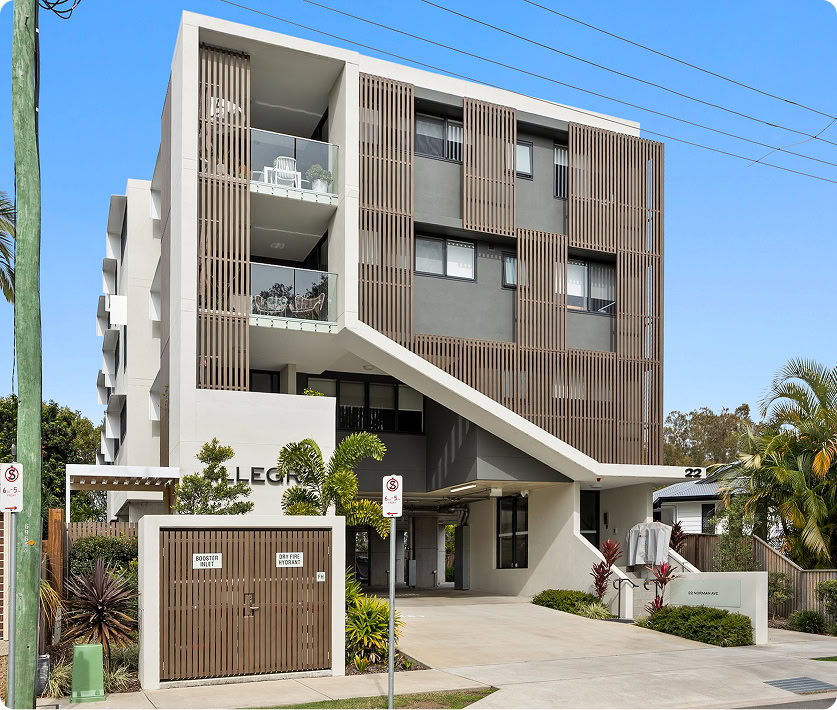
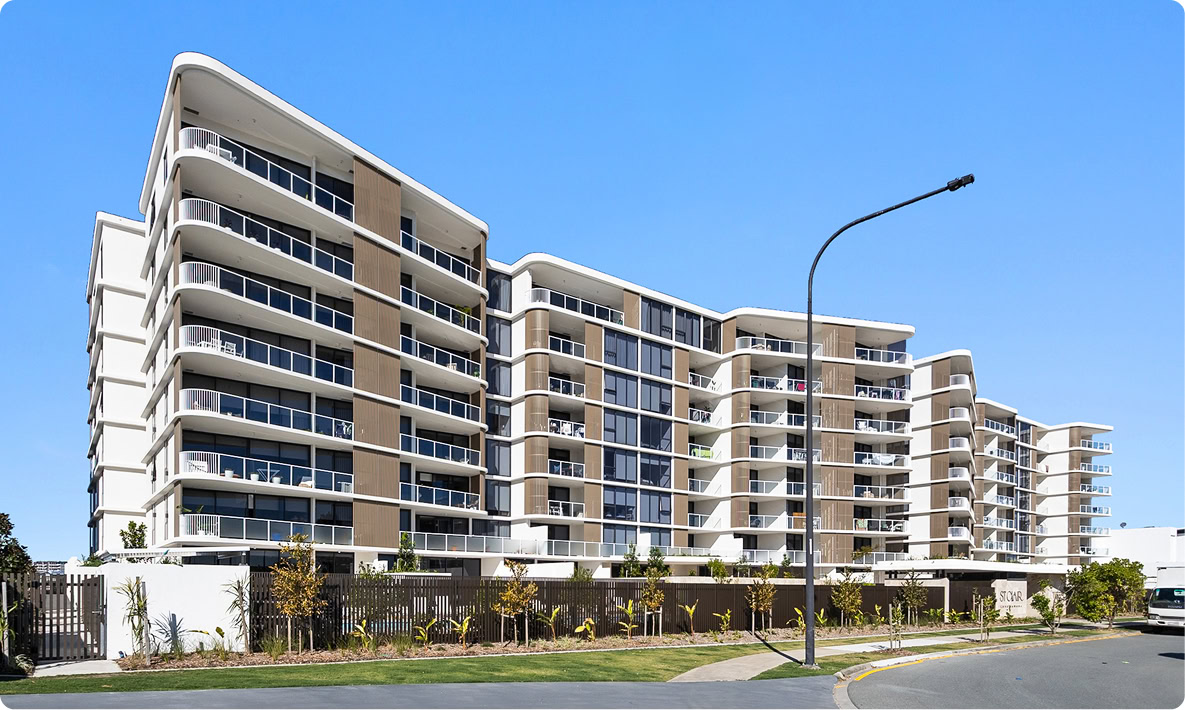
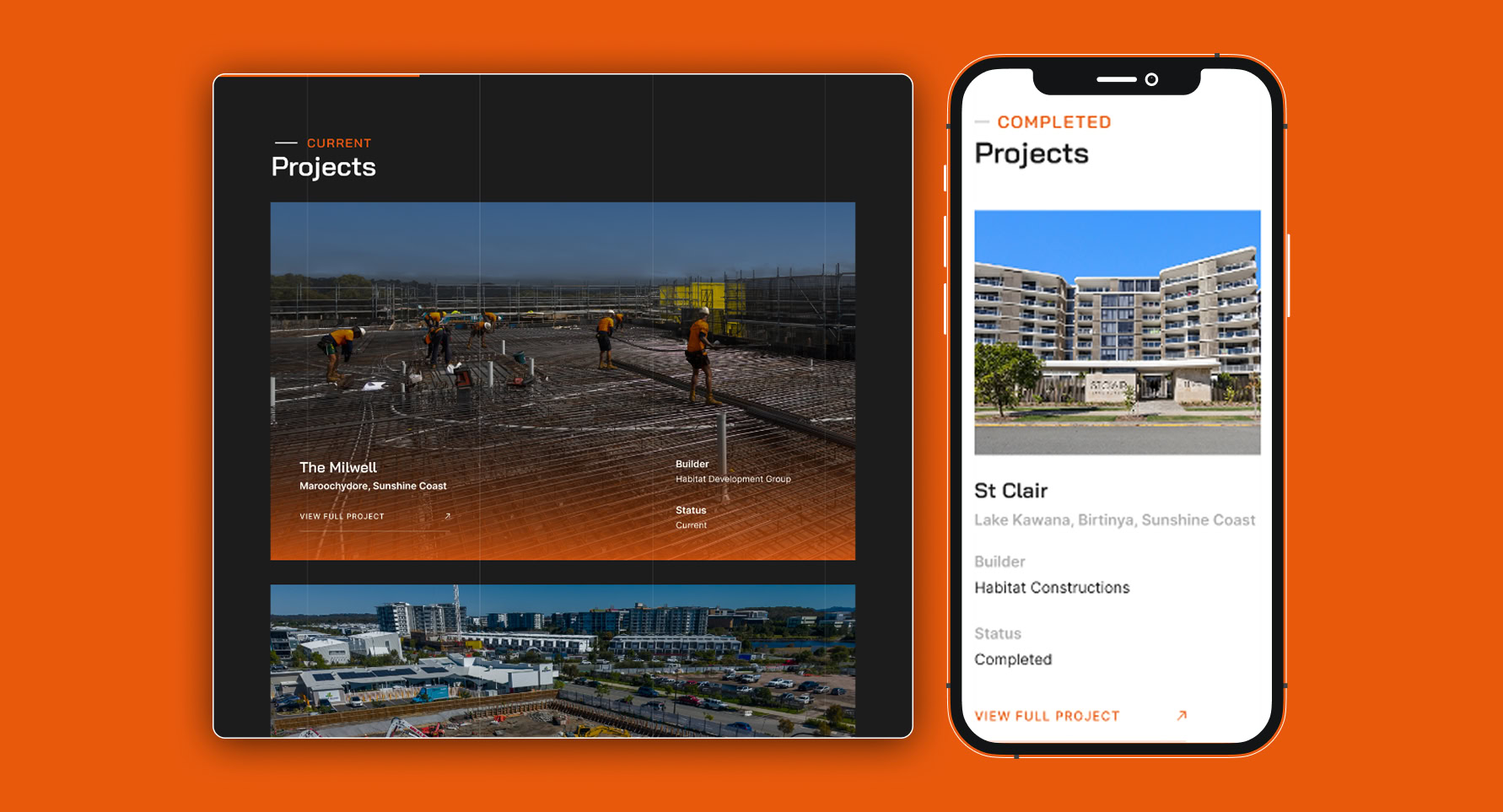
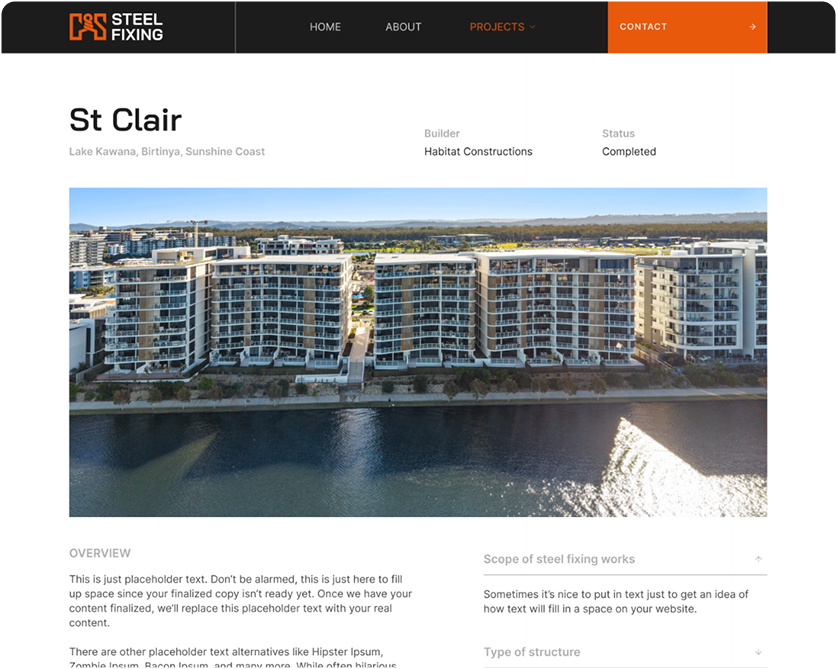
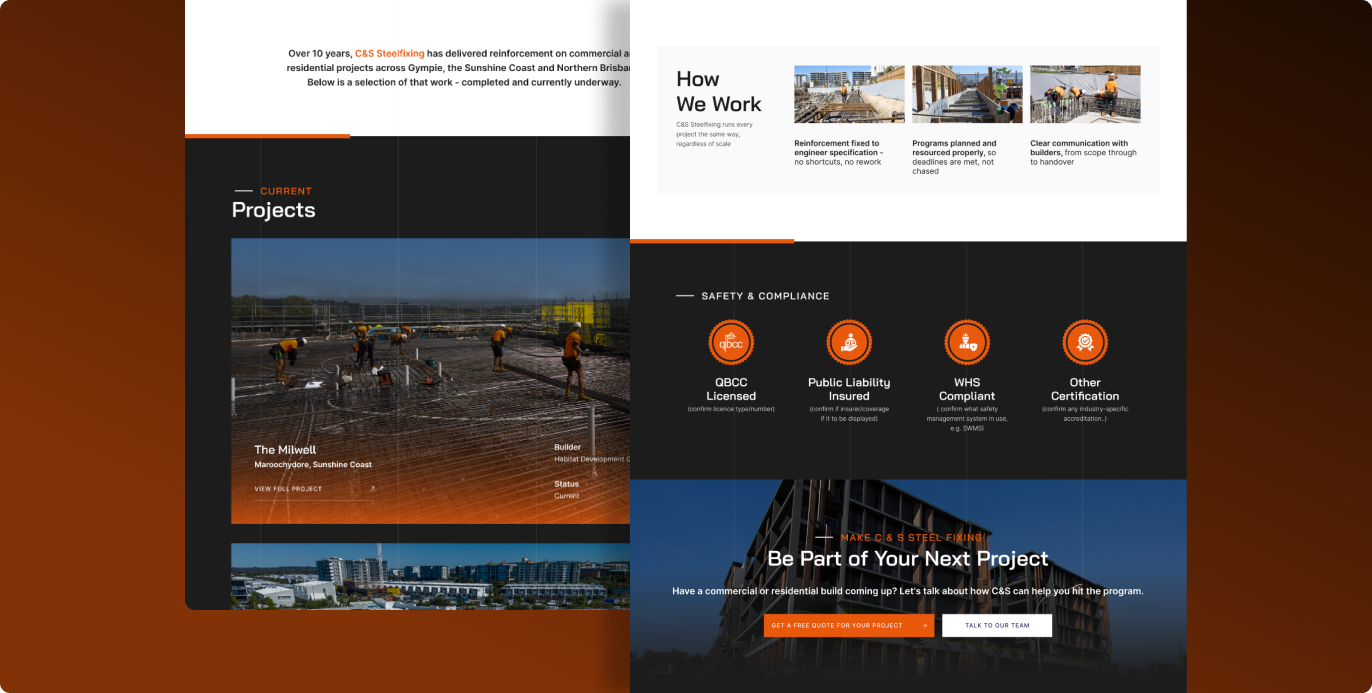
Every project card and every project page names the builder who ran it. The Beachfront Buddina with Tomkins. Avalon with Mosaic Property Group. The Milwell with Habitat Development Group. A site manager reads that and immediately knows whether C&S has worked alongside people he trusts.
Project pages built like a spec sheet
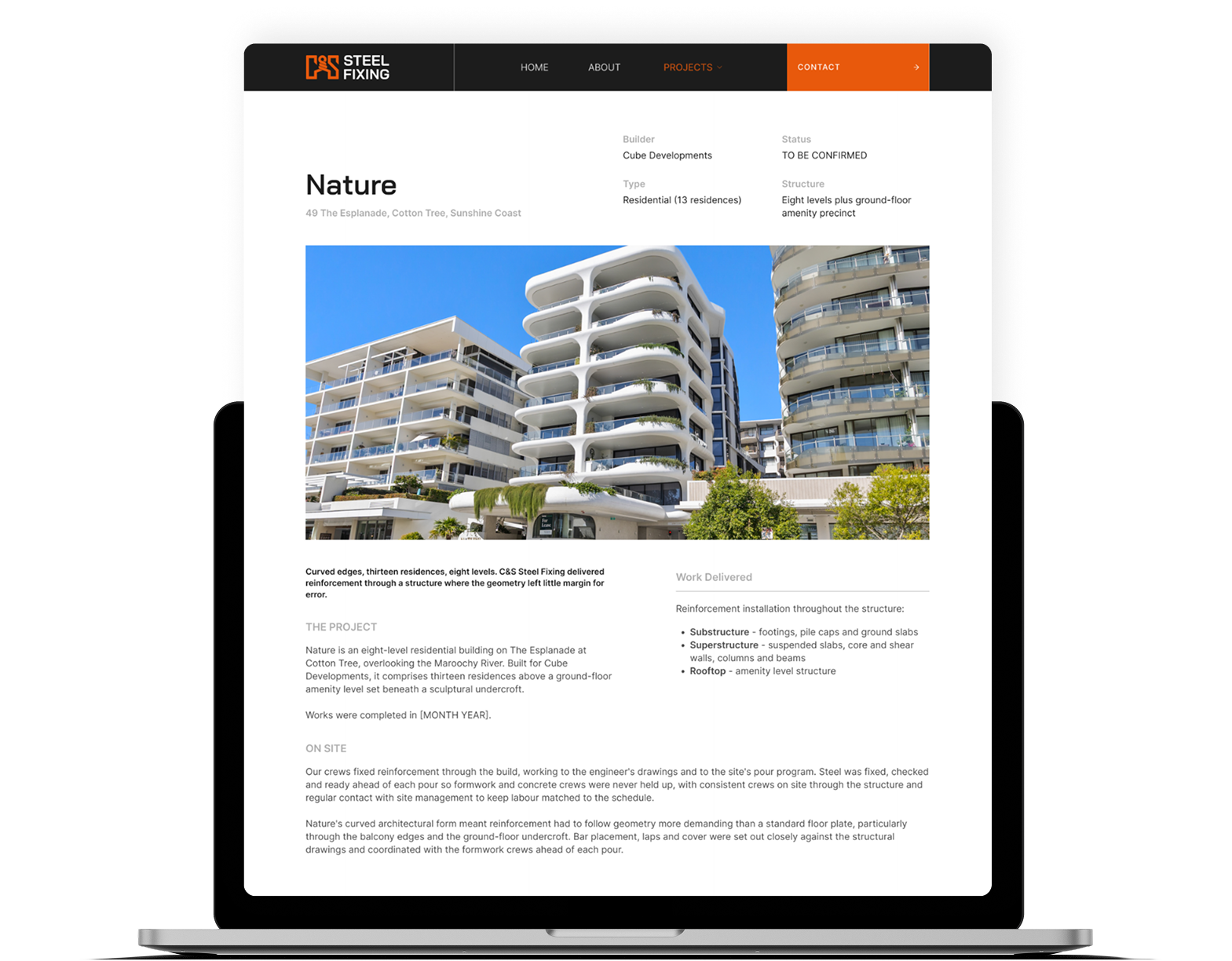
Each project opens with four fields: builder, status, type and structure. The Milwell reads Habitat Development Group, under construction, residential, multi-level. No scrolling, no marketing preamble.
It is the information a procurement decision actually runs on, in the format that audience expects to receive it.
"Our Involvement", written in site language
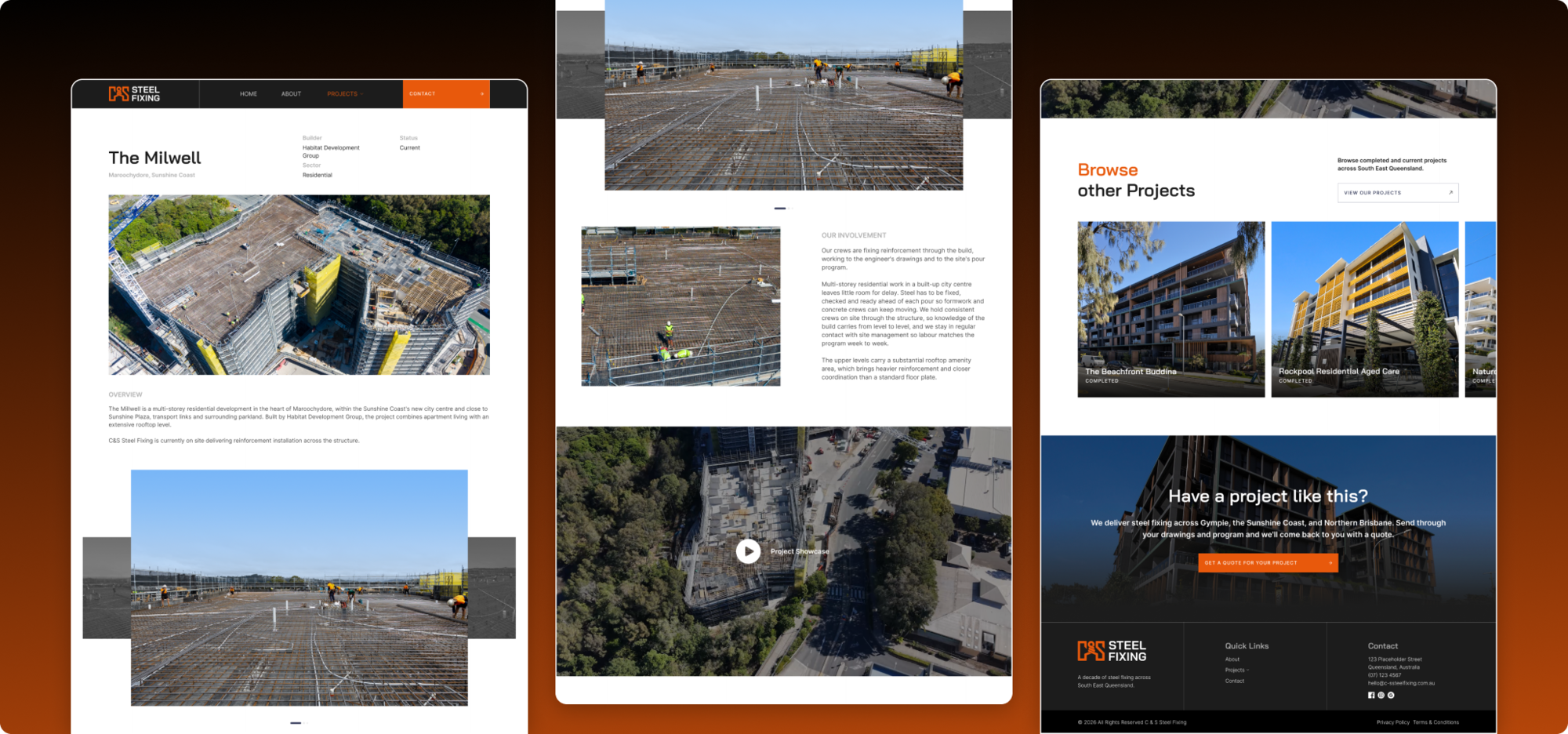
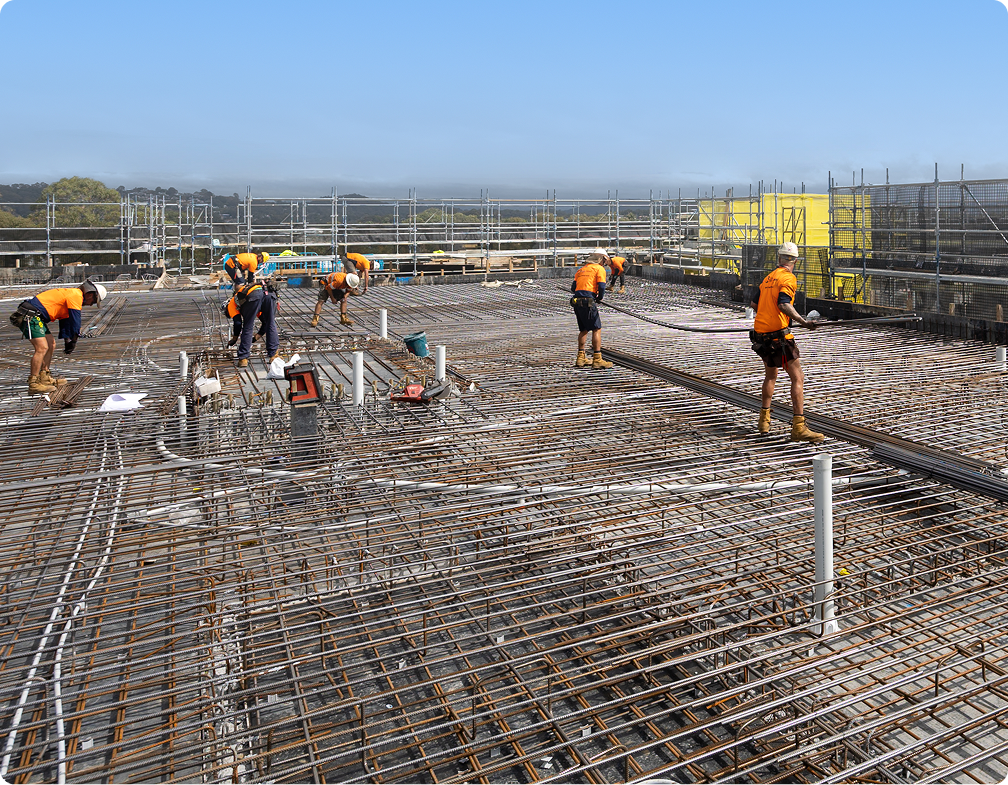
The strongest copy on the site. On The Milwell, the section explains that crews work to the engineer’s drawings and the site’s pour program, that steel has to be fixed, checked and ready ahead of each pour so formwork and concrete crews keep moving, that consistent crews are held on site so knowledge of the build carries from level to level, and that the rooftop amenity level carries heavier reinforcement than a standard floor plate.
No builder reads that and wonders whether C&S understands their problem. Written for the reader rather than about the client, which in this category is rare.
Capability broken down
The process,
Slabs and footings, walls and columns, beams, cages and prefabrication, and civil work. Builders do not search for steel fixing in general. They have a specific element in front of them, and they want to see it named.
Capability broken down by element
Slabs and footings, walls and columns, beams, cages and prefabrication, and civil work. Builders do not search for steel fixing in general. They have a specific element in front of them, and they want to see it named.
Compliance in one block
QBCC licence 1287228, public liability insurance, WHS compliance, and a certificate of currency available on request. Grouped in a single band so the contracts or safety person can clear their check in one look rather than hunting across pages.
The process,
with a standard attached
A photograph, 26 years, and a clear statement that he leads every project personally. The founding idea is stated plainly: builders should not have to worry about whether their steel fixer will show up, get it right, and hit the program. That is the promise the whole site is arranged to support.
The deliberate omission
C&S has four pages. No service-area landing pages, no blog, no long tail of location content.
That was a decision, not a shortcut. Builders do not find subcontractors through local search the way a homeowner finds a concreter. They arrive by referral, by name search, or by a link someone sent them, and what they need at that moment is proof and specifics, not volume.
Four pages that answer the four real questions beat twenty that dilute them.
If the strategy shifts toward winning work from builders who have never heard of C&S, that changes. Until then, depth on the projects is worth more than breadth on the site.
project enquiries in the first
post-launch
enquiries arriving from builders C&S had not worked with before
change in average project size or value
referral conversations shortened, measured by Shane's own reporting
organic traffic on brand and name searches
Take these four things back to
your own site
clients.
Six builder logos beat any paragraph about reliability, because a stranger can verify them and a stranger cannot verify an adjective. If your clients allow it, put their names on your homepage.
not about yourself.
The best copy on this site describes the builder’s problem: pours that will not wait, formwork crews that need the steel ready, knowledge that has to carry from level to level. Read your own about page and count how many sentences are about you.
finished work.
A project marked under construction proves the business is active today. Completed work alone can read as a business that has stopped.
qualify for you.
One required field, company name, and every enquiry arrives pre-sorted. Add the one field that tells you whether a lead is real.
We will audit your website free and show you at least three high-impact fixes. If we cannot find three, we will pay you $100.
Michael Donovan
Founders, Growthify